

Modafinil is a prescription medicine that is basically used to promotes wakefulness. Unlike traditional stimulants, it produces its effects through a different mechanism and is less likely to cause the intense highs and lows associated with amphetamine-based medicines.
Doctors primarily prescribe modafinil to treat narcolepsy, obstructive sleep apnea (OSA) with residual excessive daytime sleepiness, and shift work sleep disorder (SWSD). The most common adult dose is 200 mg once daily, although some patients receive 100 mg or 400 mg depending on their medical condition and clinical response.
Well-known brand names of modafinil available include Provigil®, Modalert®, Modvigil®, Modawake®, and Modafil MD. In the United Kingdom, modafinil is a Prescription Only Medicine (POM), so patients usually obtain it through a registered doctor and a licensed pharmacy after a clinical assessment.
What Is Modafinil?
Modafinil is a prescription-only wakefulness-promoting medicine classified as a eugeroic that increases alertness in people with excessive daytime sleepiness caused by specific sleep disorders. According to a pooled analysis of placebo-controlled clinical trials, around 65% to 75% of patients with narcolepsy experienced clinically meaningful improvements in daytime wakefulness after treatment with modafinil, making it one of the most extensively studied medicines for excessive daytime sleepiness.
According to psychiatrist Dr Tracey Marks from the united states, modafinil is often described as a wakefulness-promoting medicine rather than a traditional stimulant because it increases alertness while producing fewer stimulating effects than amphetamines. She also notes that it should always be used under medical supervision because individual responses vary.
The drug classification of modafinil is a eugeroic (wakefulness-promoting agent). It is not a benzodiazepine, which explains why it does not produce its effects by calming the brain. Instead, modafinil blocks dopamine transporters and influences several neurotransmitters involved in wakefulness, including orexin, histamine, norepinephrine, and glutamate. Research also shows that it decreases GABA activity in parts of the brain responsible for promoting sleep, helping maintain alertness throughout the day.
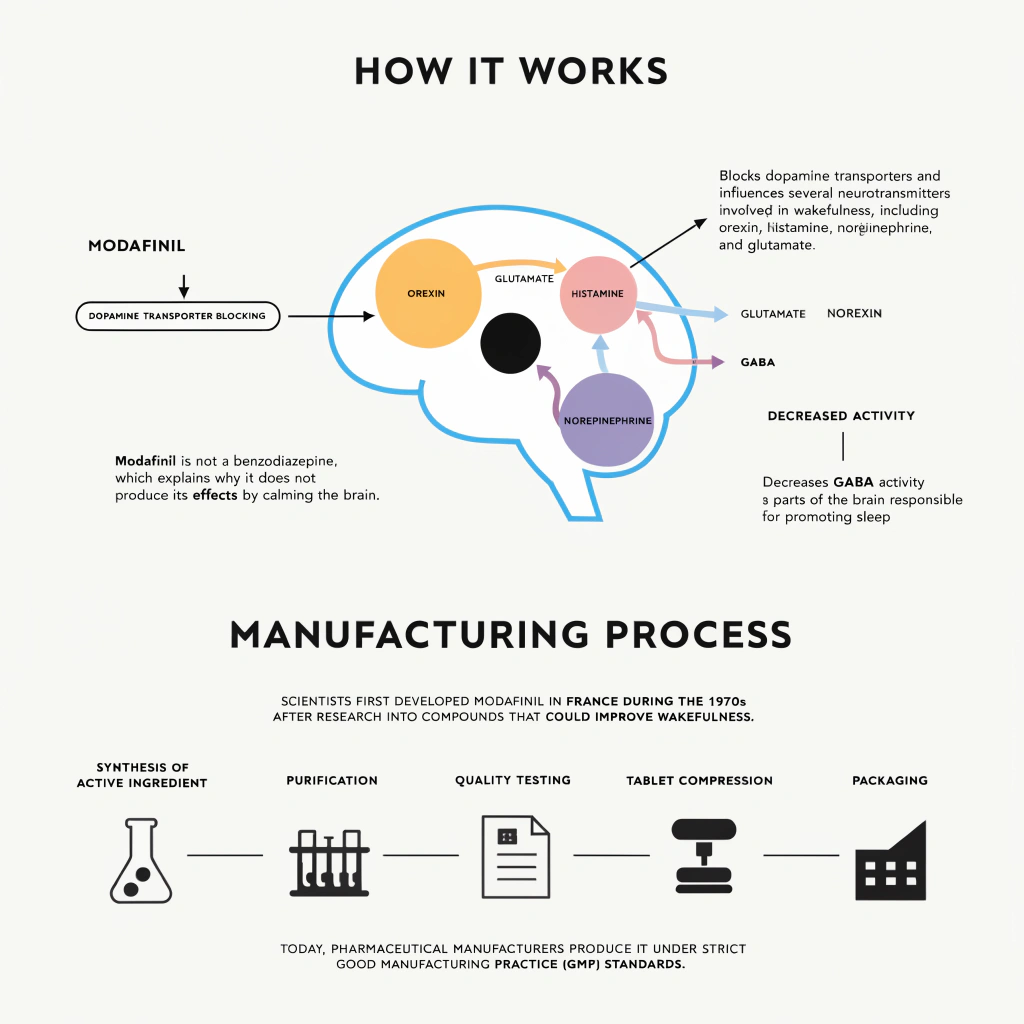
Scientists first developed modafinil in France during the 1970s after research into compounds that could improve wakefulness. Today, pharmaceutical manufacturers produce it under strict Good Manufacturing Practice (GMP) standards by synthesising the active ingredient, purifying it, performing extensive quality testing, and compressing it into tablets before packaging.
The best-known brand name of modafinil is Provigil®. Other recognised international brands include Modalert®, Modvigil®, Modawake®, and Modafil MD®. Internationally, modafinil has been used for narcolepsy, obstructive sleep apnea, and shift work sleep disorder, which also formed the basis of its FDA approvals. However, in the United Kingdom, the MHRA currently licenses modafinil primarily for adult narcolepsy, and any other use may be considered only after careful specialist assessment.
What Is the History of Modafinil?
The history of modafinil started in the early 1970s, when French researchers at Lafon Laboratories began searching for medicines that could improve wakefulness without producing the powerful stimulant effects associated with amphetamines. Their work was led by renowned sleep researcher Professor Michel Jouvet, whose studies transformed scientific understanding of the brain’s sleep-wake cycle.
The first compound developed during this research was adrafinil. Scientists later discovered that adrafinil was converted by the liver into modafinil, the active substance responsible for its wakefulness-promoting effects. This finding encouraged researchers to develop modafinil directly because it produced more predictable results and acted more efficiently.
Throughout the 1980s, clinical trials demonstrated that modafinil significantly improved daytime alertness in people living with narcolepsy while producing a lower potential for misuse than many conventional stimulants. These promising results attracted international attention from neurologists and sleep medicine specialists.
A major milestone came in 1998, when the U.S. Food and Drug Administration (FDA) approved Provigil® for treating excessive daytime sleepiness associated with narcolepsy. The indication was later expanded in the United States to include obstructive sleep apnea and shift work sleep disorder following additional clinical evidence.
In the United Kingdom, modafinil was subsequently authorised as a Prescription Only Medicine (POM). Today, it is prescribed primarily for adults with narcolepsy under specialist supervision, following guidance from the MHRA, NICE, and the British National Formulary (BNF). Researchers continue to study modafinil for other neurological and medical conditions, but UK prescribing remains focused on evidence-based clinical practice and approved indications.
In our opinion, the history of modafinil reflects how modern sleep medicine has evolved from treating symptoms alone to understanding the biological mechanisms that regulate wakefulness. That scientific foundation continues to guide its safe and responsible use in clinical practice today.
How Does Modafinil Work?
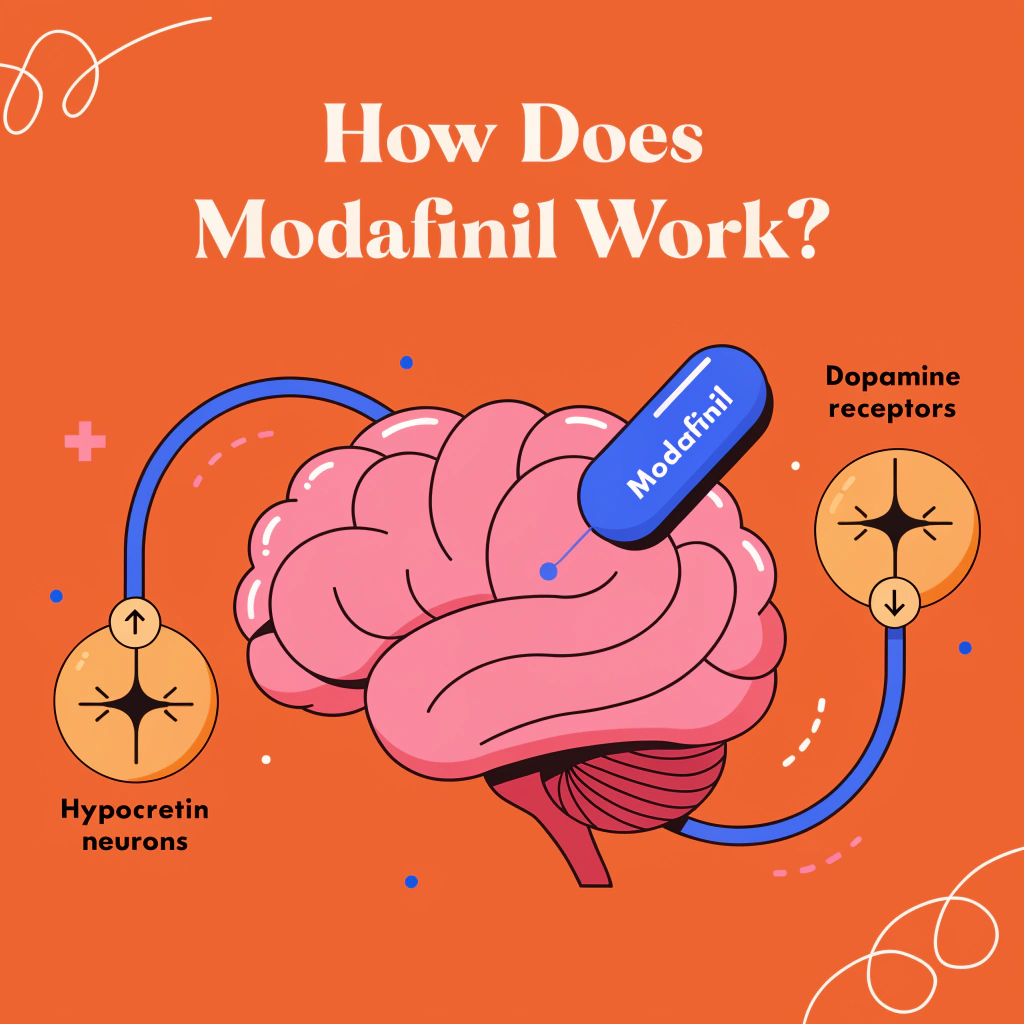
Modafinil works by increasing activity in the brain’s wakefulness centres while reducing signals that promote sleep. Unlike amphetamines, it does not simply stimulate the entire central nervous system. Instead, it acts on several neurotransmitter systems that regulate alertness and attention.
Its exact mechanism of action is not fully understood, but research shows that modafinil blocks dopamine transporters (DAT), allowing dopamine to remain active in the brain for longer. It also increases the activity of orexin (hypocretin), histamine, norepinephrine, and glutamate, while decreasing GABA activity in brain regions involved in sleep regulation. Together, these changes help the brain maintain wakefulness without producing the intense stimulation associated with many traditional stimulants.
As a result, people generally experience improved alertness, reduced daytime sleepiness, better concentration, faster reaction times, and greater ability to stay awake during activities that would normally trigger sleep. In people with narcolepsy, these effects can make everyday tasks, work, driving, and social activities much easier to manage.
Modafinil stays in the body, or the half-life of modafinil is between 12 and 15 hours in most healthy adults. Although its strongest clinical effects are usually felt during the day, the medicine continues to circulate in the bloodstream until it is gradually broken down by the liver and eliminated through the kidneys. Factors such as age, liver function, other medicines, and individual metabolism can influence how quickly it leaves the body.
What Are the Medical Uses of Modafinil?
The medical uses of modafinil include treating excessive daytime sleepiness caused by sleep disorders and supporting selected neurological and psychiatric conditions under specialist supervision. Some uses are licensed in the UK, while others are prescribed only when the expected clinical benefits outweigh the risks.
The main medical uses of modafinil are listed below.
- Narcolepsy: Narcolepsy is the Official NHS / UK Licensed Indication. Modafinil improves daytime alertness, reduces sudden sleep attacks, and provides a lasting impact on daily functioning.
- Obstructive Sleep Apnoea (OSA): OSA may be a Recognized UK Off-Label Prescribing option for persistent daytime sleepiness after optimal CPAP treatment. It does not replace airway therapy.
- Shift Work Sleep Disorder (SWSD): SWSD is an FDA-approved indication but generally considered a UK Unlabelled / Informal Use. It helps maintain alertness during night shifts in selected patients.
- Multiple Sclerosis (MS): MS-related fatigue is a Recognized UK Off-Label Prescribing use in some specialist clinics. Modafinil may reduce disabling fatigue and improve daytime activity.
- Parkinson’s Disease: Parkinson’s disease may cause severe daytime sleepiness. Some UK specialists prescribe modafinil off-label to improve alertness and reduce fatigue.
- Post-Stroke Fatigue: Persistent fatigue after stroke can limit rehabilitation. Specialist off-label prescribing may help improve energy and participation in recovery programmes.
- Major Depressive Disorder (MDD): In treatment-resistant depression, modafinil may be added to antidepressants to reduce fatigue, poor concentration, and excessive daytime sleepiness.
- Bipolar Depression: Some psychiatrists prescribe modafinil cautiously as an adjunct treatment to improve alertness while carefully monitoring mood stability.
- ADHD: ADHD is a UK Unlabelled / Informal Use. Although modafinil can improve attention, it is not routinely recommended because other licensed medicines have stronger evidence.
- Cancer-Related Fatigue: Severe fatigue during cancer treatment may improve in selected patients, although research findings remain mixed and specialist supervision is essential.
- Fibromyalgia & Myalgic Encephalomyelitis (CFS/ME): Some specialists have explored modafinil for disabling fatigue, but evidence remains limited and routine prescribing is uncommon.
- Cocaine / Amphetamine Dependence: Researchers continue investigating modafinil as a treatment for stimulant dependence, but it has not become standard clinical practice in the UK.
- Cognitive Enhancement (“Nootropic”): Healthy individuals sometimes use modafinil to improve concentration and productivity. This remains a UK Unlabelled / Informal Use and is not recommended without medical supervision.
- Jet Lag & Sleep Deprivation: Modafinil has been studied for temporary sleep deprivation and jet lag, but these are not licensed medical indications in the United Kingdom.
Although modafinil promotes wakefulness, it is not an anxiolytic medicine and should not be used to treat anxiety disorders. Its primary role is improving alertness in carefully selected patients rather than reducing emotional distress.
How Long Does Modafinil Last?
Modafinil lasts between 6 and 12 hours for most people, although the exact duration depends on dosage, age, liver function, metabolism, and whether other medicines are taken at the same time. Many people notice improved alertness within one to two hours after taking a dose, with the strongest effects occurring during the middle of the day.
The medicine’s clinical benefits usually decline gradually rather than wearing off suddenly. Because of its relatively long half-life, some people may still feel mild wakefulness into the evening, which is why doctors generally recommend taking modafinil early in the morning.
Although the noticeable effects usually last less than a day, modafinil has a half-life of approximately 12 to 15 hours, meaning it takes that amount of time for half of the medicine to leave the bloodstream. Complete elimination typically requires several days. In most healthy adults, modafinil is largely cleared within two to four days, although small amounts or inactive metabolites may remain detectable for longer depending on the type of drug test used. It does not normally remain in the body for 10 to 21 days as an active medicine.
In our opinion, understanding how long modafinil lasts is important because taking it too late in the day can interfere with normal sleep, even when the person no longer feels its strongest effects.
What Are the Common Dosages of Modafinil?

The common dosages of modafinil include 100 mg and 200 mg tablets prescribed for approved medical conditions, while 50 mg and 400 mg strengths are regional or less commonly used variations.
The common dosages of modafinil are listed below.
- 100 mg: A commonly prescribed tablet strength used for selected patients. The dose may be adjusted according to clinical response, age, medical condition, and potential side-effect profile.
- 200 mg: The most widely recognised adult tablet strength for treating excessive daytime sleepiness. Many clinical studies have evaluated its effectiveness and overall side-effect profile.
- 50 mg and 400 mg (Regional and Unofficial Variations): These strengths may be available in certain countries or specialist settings. They are less commonly used in routine UK practice and require careful assessment of potential side-effect risks.
In the United Kingdom, the appropriate strength is determined by a healthcare professional after considering the patient’s medical history, diagnosis, and response to treatment rather than choosing a standard dose for every individual.
Are There Any Side Effects of Modafinil?
Yes, there are side effects of modafinil, although many people tolerate the medicine well when it is prescribed appropriately and monitored by a healthcare professional.
The most common side effects include headache, nausea, reduced appetite, dry mouth, dizziness, nervousness, anxiety, insomnia, and stomach discomfort. These are usually mild to moderate and often improve as the body adjusts to treatment.
Less commonly, modafinil may cause palpitations, raised blood pressure, irritability, tremor, blurred vision, or mood changes. Rare but serious adverse reactions include severe allergic skin reactions such as Stevens-Johnson syndrome, swelling of the face or throat, chest pain, hallucinations, mania, suicidal thoughts, or significant psychiatric symptoms. Anyone experiencing these reactions should seek immediate medical attention.
Long-term risks remain under investigation. Current evidence suggests that prolonged use should be reviewed regularly because some people may develop psychological dependence, persistent insomnia, increased blood pressure, or cardiovascular complications, particularly if the medicine is misused or taken without medical supervision.
People also sometimes misunderstand modafinil by comparing it directly with Adderall or Ritalin. Although all three medicines can improve alertness or concentration, they belong to different drug classes and work differently in the brain. Modafinil is a wakefulness-promoting agent (eugeroic), whereas Ritalin (methylphenidate) and Adderall (mixed amphetamine salts) are central nervous system stimulants primarily prescribed for attention deficit hyperactivity disorder (ADHD). They differ in their approved indications, mechanism of action, potential for misuse, and regulatory status.
What’s the Difference Between Modafinil and Ritalin?
The difference between modafinil and Ritalin is presented in the table below.
| Feature | Modafinil | Ritalin (Methylphenidate) |
|---|---|---|
| Definition | A wakefulness-promoting medicine (eugeroic) mainly used to reduce excessive daytime sleepiness. | A central nervous system stimulant mainly prescribed for ADHD and certain cases of narcolepsy. |
| Examples | Provigil®, Modalert®, Modvigil® | Ritalin®, Concerta®, Delmosart®, Xenidate® |
| Duration of Action | Usually lasts 6–12 hours, depending on the formulation and individual metabolism. | Usually 3–12 hours, depending on whether the preparation is immediate or modified release. |
| Onset Time | Commonly begins working within 1–2 hours. | Often begins working within 20–60 minutes. |
| Common Clinical Uses | Narcolepsy (licensed in the UK), with selected specialist off-label uses for severe fatigue or sleep disorders. | ADHD and narcolepsy under specialist assessment and ongoing monitoring. |
| Main Difference | Promotes wakefulness by affecting dopamine, orexin, histamine, glutamate, and reducing GABA activity. | Increases dopamine and norepinephrine primarily by blocking their reuptake, producing stronger stimulant effects. |
Another medicine frequently compared with both is Adderall. Unlike modafinil and Ritalin, Adderall contains mixed amphetamine salts and is not licensed for routine medical use in the United Kingdom. Although all three medicines influence attention and alertness, they differ substantially in their pharmacology, approved indications, and safety considerations, which is why they should never be considered interchangeable.
What’s the Difference Between Modafinil and Adderall?
The difference between modafinil and Adderall is presented in the table below.
| Feature | Modafinil | Adderall |
|---|---|---|
| Definition | A wakefulness-promoting medicine (eugeroic) mainly prescribed to treat excessive daytime sleepiness. | A central nervous system stimulant containing mixed amphetamine salts, primarily prescribed for ADHD and narcolepsy in countries where it is licensed. |
| Examples | Provigil®, Modalert®, Modvigil®, Modawake® | Adderall®, Adderall XR® |
| Duration of Action | Usually 6–12 hours, depending on the individual and formulation. | Usually 4–6 hours for immediate-release and 10–12 hours for extended-release formulations. |
| Onset Time | Generally begins working within 1–2 hours. | Usually starts working within 30–60 minutes. |
| Common Clinical Uses | Licensed in the UK mainly for adult narcolepsy, with selected specialist off-label uses. | Mainly prescribed for ADHD and narcolepsy in countries where it is approved. It is not routinely licensed for medical use in the UK. |
| Main Difference | Increases wakefulness by affecting dopamine, orexin, histamine, glutamate, and reducing GABA activity. | Directly increases dopamine and norepinephrine release, producing stronger stimulant effects and a higher potential for misuse. |
Although both medicines improve alertness, they are not interchangeable. The most suitable treatment depends on the underlying condition, medical history, and assessment by a qualified healthcare provider, who will consider both the potential benefits and safety risks before recommending either medicine.
Is Seeing a Doctor Necessary Before Taking Modafinil?
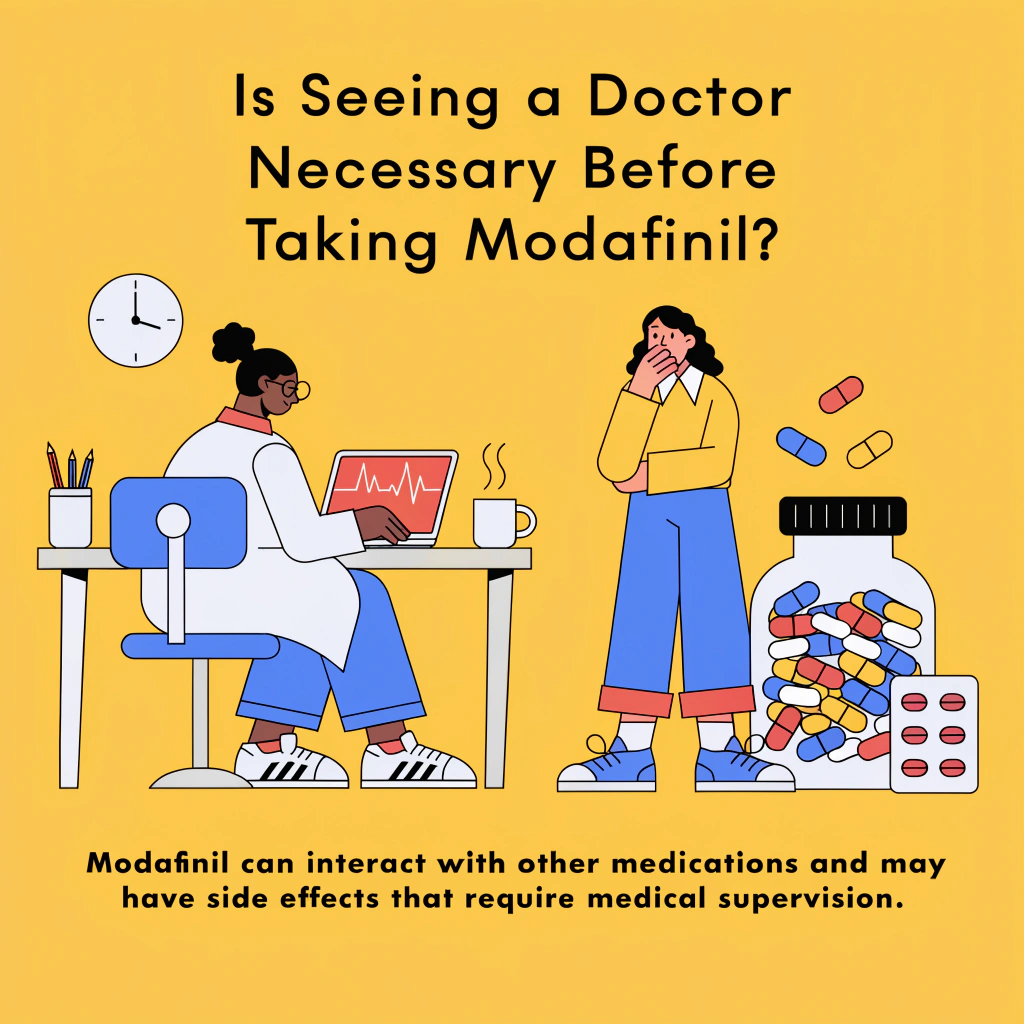
Yes, seeing a doctor is necessary before taking modafinil because excessive daytime sleepiness can result from many different medical conditions, and not every patient will benefit from a wakefulness-promoting medicine.
Before prescribing modafinil, a doctor reviews your medical history, current medicines, allergies, blood pressure, heart health, mental health history, liver function, and sleep pattern. They also investigate underlying conditions such as narcolepsy, obstructive sleep apnoea, thyroid disorders, depression, or other sleep disorders that may require different treatment.
Medical supervision also helps identify possible medicine interactions, monitor side effects, assess whether treatment remains effective, and determine if ongoing therapy is still appropriate. Although modafinil causes less physical dependence than many stimulant medicines, doctors continue to monitor long-term use carefully and manage treatment changes safely if the medicine needs to be reduced or stopped.
Because there are many modafinil brands available internationally, a healthcare professional can also help ensure patients receive a genuine pharmaceutical product from a reliable source that meets recognised quality standards.
In our opinion, modafinil should never be viewed as a simple productivity medicine. It is a prescription treatment designed for specific medical conditions, and proper assessment remains the safest way to achieve the best outcome.
What Are the Most Trusted Modafinil Brands?
The most trusted modafinil brands include licensed UK products, high-quality generic manufacturers, and internationally recognised pharmaceutical brands produced under regulated manufacturing standards.
The most trusted modafinil brands are listed below.
Licensed UK Brands and Generic Manufacturers
- Provigil® (Teva/Cephalon): The original branded modafinil medicine. It established the clinical evidence and remains one of the most recognised pharmaceutical brands worldwide.
- Milpharm Modafinil: A UK-licensed generic modafinil available in 100 mg and 200 mg tablet strengths. It is marketed by Milpharm Ltd, part of Aurobindo Pharma UK.
- Teva Modafinil: Teva supplies generic modafinil through the regulated UK medicines supply chain, with products distributed to NHS hospitals and community pharmacies.
- Accord Healthcare Modafinil: A generic modafinil supplied through UK pharmaceutical wholesalers and prescribed where clinically appropriate.
- Brown & Burk UK Modafinil: A licensed generic manufacturer that supplies modafinil to UK pharmacies through authorised pharmaceutical distribution channels.
- Generic Modafinil (AAH & Alliance Healthcare Supply): Many UK prescriptions are dispensed as licensed generic modafinil sourced through major pharmaceutical wholesalers such as AAH Pharmaceuticals and Alliance Healthcare, depending on local availability.
International Brands Commonly Found Online
- Modalert® (Sun Pharmaceutical Industries): One of the world’s best-known modafinil brands. It is manufactured in India and is widely recognised in international markets.
- Modvigil® (HAB Pharmaceuticals): An established international generic modafinil brand manufactured under pharmaceutical quality standards for export markets.
- Modawake® (HAB Pharmaceuticals): Another internationally distributed modafinil brand produced by HAB Pharmaceuticals and available through overseas suppliers.
- Modafil MD®: An orally dispersible modafinil formulation designed for patients who have difficulty swallowing conventional tablets.
In our opinion, UK patients should prioritise MHRA-authorised modafinil products supplied by registered pharmacies rather than selecting medicines solely by brand name. Whether the medicine is Provigil® or a licensed generic manufacturer such as Milpharm, Teva, Accord Healthcare, or Brown & Burk, every product dispensed through the regulated UK supply chain must meet strict standards for quality, safety, and bioequivalence before reaching patients.
How to Buy High-Quality Modafinil in the UK?

The common ways to buy high-quality modafinil in the United Kingdom are listed below.
- Obtain a valid prescription: A doctor confirms whether modafinil is appropriate for your diagnosed medical condition.
- Use a registered UK pharmacy: Purchase only from pharmacies regulated by the General Pharmaceutical Council (GPhC).
- Check MHRA-authorised medicines: Ensure the product has been supplied through the UK’s regulated medicines supply chain.
- Verify the packaging: Check batch numbers, expiry dates, patient information leaflets, and tamper-evident packaging.
- Avoid unverified online sellers: Counterfeit medicines are more common on websites operating outside UK regulations.
- Ask a pharmacist: Pharmacists can explain the medicine, expected effects, and important safety information.
Is It Possible to Buy Modafinil Without a Prescription in the UK?
No, it is not possible to buy modafinil without a prescription in the UK because it is a Prescription Only Medicine (POM) under the Human Medicines Regulations 2012. This means registered pharmacies may only supply modafinil after receiving a valid prescription from an authorised prescriber. Modafinil UK helps you understand prescription requirements and safe uses of modafinil in UK.
The prescription requirement exists to protect patient safety. Before prescribing modafinil, doctors assess the underlying cause of excessive daytime sleepiness, review medical history, consider possible medicine interactions, and determine the most appropriate dosage based on the individual’s condition. Regular follow-up also helps monitor effectiveness and potential side effects.
Patients should obtain modafinil only through regulated healthcare services and licensed pharmacies. Purchasing medicines from unverified websites increases the risk of receiving counterfeit, substandard, or incorrectly labelled products.
Whether a patient receives a branded product or a generic equivalent, choosing a trusted modafinil brand supplied through the regulated UK medicines system helps ensure appropriate quality, safety, and consistency. The goal of treatment is safe medical usage under professional supervision rather than simply obtaining the medicine.
This article was clinically reviewed on 26 July 2026.