- Discount up to 35% for first purchase only this month.
- support@yourdomain.tld
- +6221.2002.2012

Modafinil‑uk.org began not as a business idea, but as a quiet observation made over years of clinical practice. David O’Regan, a consultant in psychiatry and sleep medicine, noticed a worrying pattern: more and more patients were arriving at the Sleep Disorders Centre having already bought modafinil online — often without a prescription, unsure whether the tablets they held were genuine, and dangerously uninformed about the risks. The internet had promised them clarity but delivered confusion, counterfeit products, and well‑disguised marketing dressed as advice.
Determined to offer something different, we built a small team of clinical and editorial specialists. Together, we created a single, carefully structured resource that doesn’t pretend to be a clinic. Instead, we answer the questions people actually type into search engines: Is this brand real? What does a genuine tablet look like? How to buy genuine modafinil online in the UK? And what are the real risks of buying it elsewhere?
What started as a side project has grown into a trusted guide used by patients, carers, and healthcare students across the country. Every article is written in plain language and reviewed by a qualified clinical pharmacist. No hype, no scare‑mongering — just practical, evidence‑based information that respects the reader’s intelligence and their right to make safe decisions.
Our mission is simple: to become the most reliable, user‑friendly source of modafinil information in the UK, and to keep it completely free from commercial influence.
We focus on three areas that other sites often blur together — safe use, authentic brand identification, and the real‑world conditions modafinil is prescribed to treat. Narcolepsy, shift work sleep disorder, and obstructive sleep apnoea are complex, life‑altering conditions. The decision to take a wakefulness‑promoting agent should be grounded in clinical evidence, not a cleverly written product listing.
We exist to bridge the information gap between a doctor’s prescribing pad and what patients encounter when they search online. Every piece of content is referenced against NICE guidelines, MHRA safety alerts, and peer‑reviewed research. Behind the scenes, a clinical pharmacist checks every medication‑related claim, and a dedicated medical writer ensures the language is precise but never intimidating.
We don’t accept advertising, we don’t sell consultation leads, and we don’t link to online pharmacies. This site is funded and operated independently, with a single purpose: to give you the knowledge you need to understand modafinil, identify authentic products, and, most importantly, stay safe.

We ensure quality and commitment at all stages. Please feel free to get in touch if you need more information about modafinil.
David O’Regan works as a consultant in psychiatry and sleep medicine at a leading UK Sleep Disorders Centre. Over more than a decade of clinical practice, he has supported hundreds of patients with narcolepsy, shift work disorder, and related conditions — many of whom first encountered modafinil through unregulated online sources. That first‑hand experience shaped his determination to build an independent educational platform where clinical accuracy and patient safety come before everything else. David oversees the site’s strategic direction, ensures all content aligns with UK prescribing standards, and regularly contributes articles that draw on his dual expertise in mental health and sleep medicine. His professional registration can be verified on the General Medical Council (GMC) register.

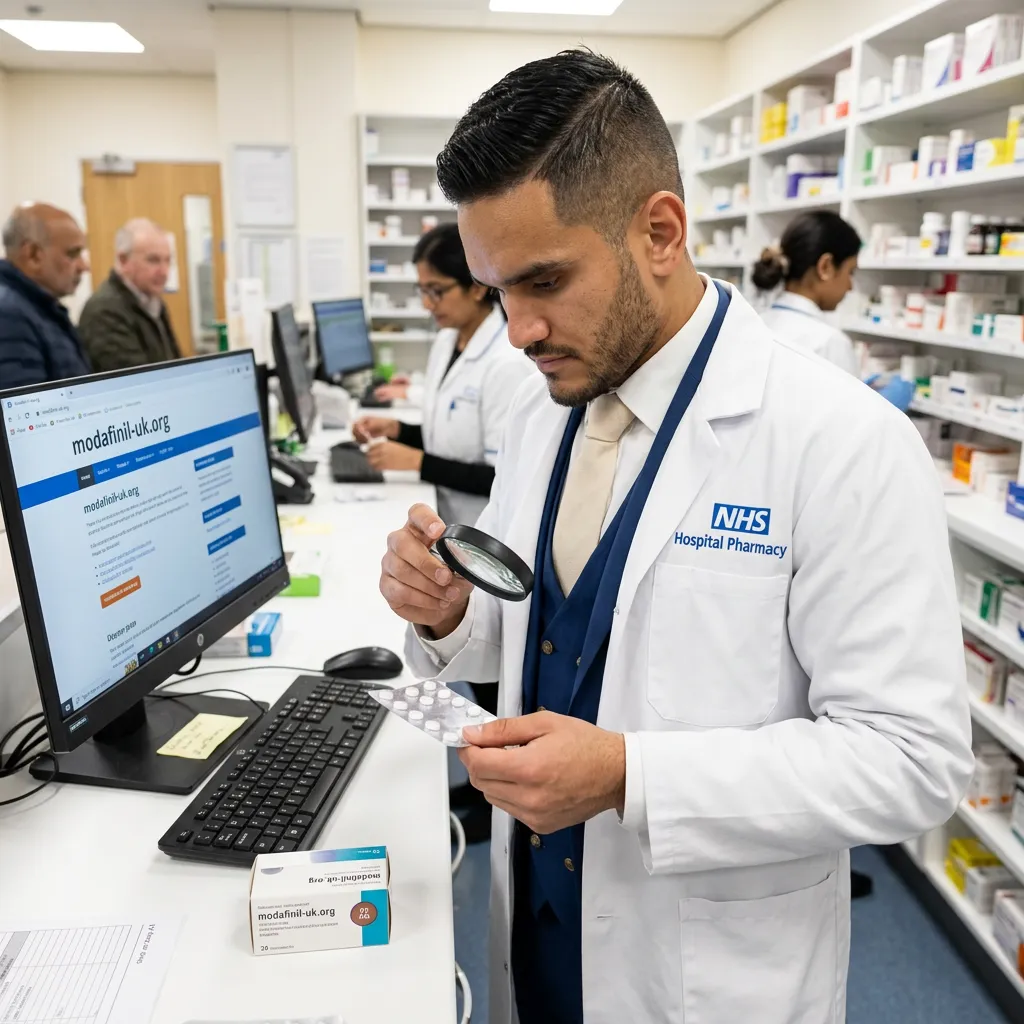
Kavi Keerthisingam is a clinical pharmacist with three years’ post‑qualification experience in a large NHS‑led organisation. In his daily role, he reviews complex medication regimens, advises prescribers on safety and interactions, and helps patients understand exactly what their medicines should look like and how they should be taken. Kavi brings that same meticulous, patient‑centred approach to modafinil‑uk.org, where he is responsible for clinically reviewing every article before publication. His specialist knowledge of pharmaceutical quality, counterfeit detection, and UK pharmacy regulation ensures that the brand‑identification guides and safety information on this site are grounded in current clinical and regulatory practice. Kavi is registered with the General Pharmaceutical Council (GPhC).
Matthew Young is a freelance medical writer who specialises in producing high‑impact publications, including manuscripts for peer‑reviewed journals, patient education materials, and evidence summaries for healthcare professionals. With a background in neuroscience and over seven years of experience translating complex research into clear, accessible prose, Matthew writes the majority of the content on modafinil‑uk.org. His work covers everything from the neurobiology of wakefulness to step‑by‑step tablet‑identification visuals. Matthew ensures that every article is both scientifically accurate and genuinely readable — free from jargon, but never oversimplified. His commitment to transparency means every claim is backed by a cited source, giving readers the tools to verify the information for themselves.
Every piece of content on Modafinil UK is created through a structured, three‑stage process designed to meet the standards expected of a trusted health information resource.
1. Research and writing: Articles are drafted by Matthew Young, an experienced medical writer with a neuroscience background. He draws on current NICE guidance, MHRA safety alerts, British National Formulary (BNF) monographs, peer‑reviewed journal articles, and official patient information leaflets. All sources are clearly cited so that readers can verify the information for themselves.
2. Clinical review: Before publication, every medication‑related article is reviewed by Kavi Keerthisingam, a GPhC‑registered clinical pharmacist. He checks each piece for pharmaceutical accuracy, correct brand identification, and alignment with UK prescribing regulations. His review ensures that no page contains clinical claims that would mislead a patient or contradict established medical guidance.
3. Ongoing updates: Medical information can change quickly. We revisit published articles regularly and update them whenever new NICE recommendations, MHRA warnings, or relevant research findings emerge. The date of last review is displayed at the top of each article, along with the name of the clinical reviewer.
Independence: We do not accept advertising, sponsorship, or any form of payment from pharmaceutical companies, online pharmacies, or supplement retailers. This site is independently operated and funded solely by its founder, David O’Regan, as a public health education resource. Our content is never influenced by commercial interests.
Corrections: If a factual error is identified by a reader or a member of our team, we correct it promptly and note the change on the affected page. We welcome feedback at corrections@modafinil-uk.org.