

Central Nervous System (CNS) stimulants are medicines that increase activity in the brain and spinal cord. They work by increasing the activity of neurotransmitters that regulate focus, motivation, and the sleep-wake cycle, allowing nerve cells to communicate more effectively. In the United Kingdom, CNS stimulants are prescribed to manage conditions such as attention deficit hyperactivity disorder (ADHD), narcolepsy, and selected neurological disorders under specialist supervision.
These medicines are available as short-acting, immediate-release, and long-acting (modified-release) formulations depending on the patient’s clinical needs. Common examples include methylphenidate, lisdexamfetamine, dexamfetamine, modafinil, and other licensed stimulant medicines.
Among them, modafinil is widely recognised for improving wakefulness in adults with narcolepsy and is supplied in the UK only as a Prescription Only Medicine (POM) through a registered healthcare professional and licensed pharmacy.
What Is a Central Nervous System (CNS) Stimulant?
Central Nervous System Stimulant is a class of medicines that increases brain and spinal cord activity to improve wakefulness, attention, concentration, and cognitive performance by enhancing neurotransmitter signalling.
According to large clinical reviews, stimulant medicines improve the core symptoms of ADHD in approximately 70% to 80% of patients, while modafinil has consistently demonstrated significant improvements in daytime wakefulness among adults with narcolepsy. These outcomes have made CNS stimulants one of the most extensively studied medicine groups in neurology and psychiatry.
According to Professor Russell Barkley, a leading ADHD researcher whose educational lectures are widely available, stimulant medicines do not simply make people more energetic. Instead, they improve communication between brain regions responsible for attention, planning, self-control, and decision-making, allowing many patients to function more effectively in everyday life.
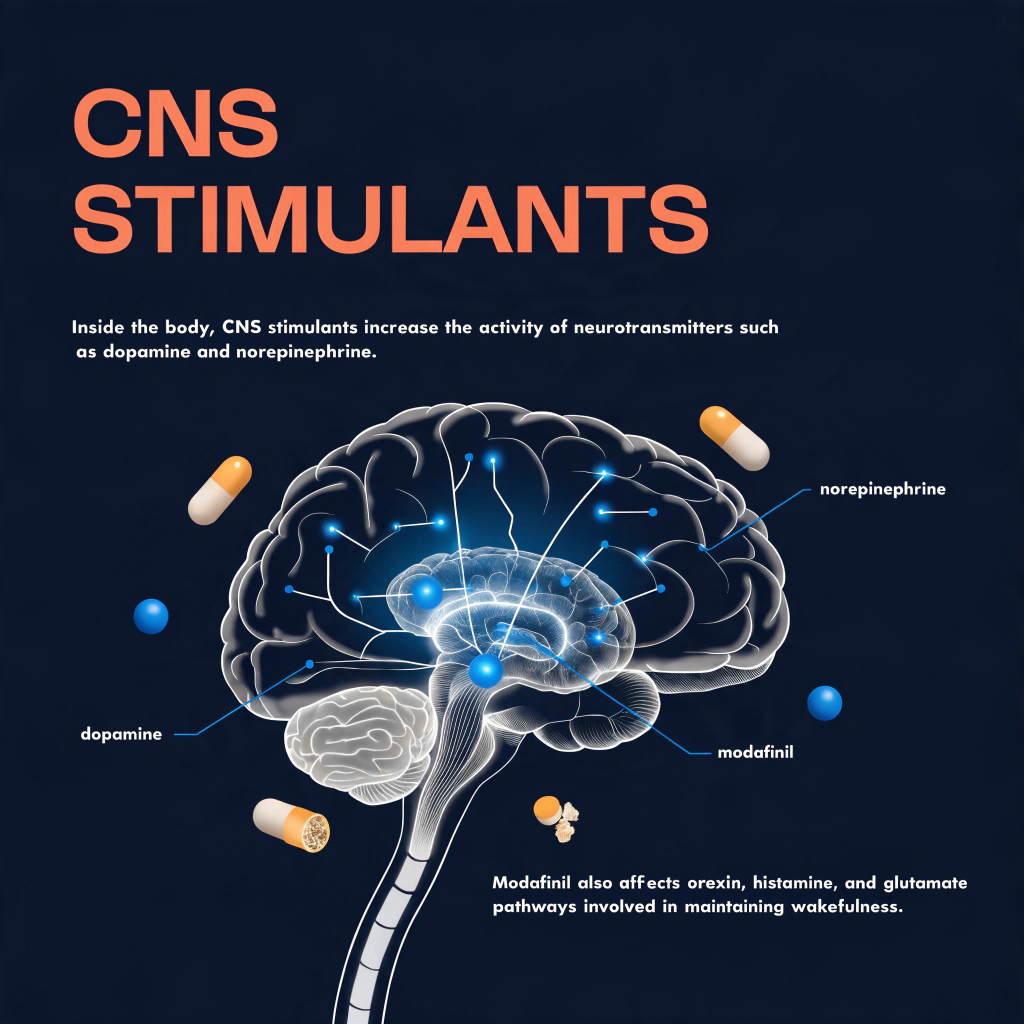
The drug classification of CNS stimulants includes traditional psychostimulants such as methylphenidate, lisdexamfetamine, and dexamfetamine, alongside wakefulness-promoting medicines such as modafinil, which belongs to a specialised subgroup known as eugeroics. These medicines are manufactured under strict pharmaceutical quality standards through controlled chemical synthesis, purification, stability testing, and tablet or capsule formulation before reaching patients.
Inside the body, CNS stimulants increase the activity of neurotransmitters such as dopamine and norepinephrine. Modafinil also influences orexin, histamine, and glutamate pathways involved in maintaining wakefulness. Together, these effects increase alertness, improve concentration, reduce excessive daytime sleepiness, and enhance cognitive performance in appropriately selected patients.
Modern prescription CNS stimulants have existed for more than a century, while naturally occurring stimulants such as caffeine have been consumed for thousands of years. Scientific understanding has expanded rapidly over recent decades as researchers uncovered the brain circuits responsible for attention, motivation, and the sleep-wake cycle.
In the United Kingdom, the prescription status of most CNS stimulants is Prescription Only Medicine (POM). Several medicines within this group are also regulated as controlled drugs, meaning they can only be prescribed and supplied under strict legal and clinical safeguards.
What Is the History of Central Nervous System (CNS) Stimulants?
The history of Central Nervous System stimulants began in ancient civilisations, where people discovered that naturally occurring substances such as tea, coffee, and cacao helped them remain awake, think more clearly, and work for longer periods. Although the biology was unknown, these natural stimulants became part of everyday life across many cultures.
The scientific development of CNS stimulants accelerated during the late nineteenth century as advances in chemistry allowed researchers to isolate and manufacture active compounds that affected the brain. This work eventually led to medicines capable of improving attention, reducing excessive daytime sleepiness, and enhancing wakefulness under medical supervision.
During the 1930s, stimulant medicines became increasingly recognised for their medical value, particularly in treating narcolepsy, a neurological disorder characterised by overwhelming daytime sleepiness. Researchers later discovered that these medicines also improved attention and impulse control, laying the foundation for modern ADHD treatment.
Another important milestone came in the 1970s, when French scientists developed modafinil while studying the biology of sleep and wakefulness. Unlike traditional stimulants, modafinil introduced a different pharmacological approach by promoting alertness through several neurotransmitter systems rather than producing widespread central nervous system stimulation. This discovery significantly expanded treatment options for sleep medicine.
Over the following decades, advances in neuroscience transformed how doctors understood CNS stimulants. Rather than viewing them simply as medicines that increase energy, researchers demonstrated that they improve communication within complex brain networks responsible for attention, executive function, learning, motivation, and wakefulness.
Today, CNS stimulants play an important role in modern neurological, psychiatric, and sleep medicine. In the UK, medicines such as methylphenidate, lisdexamfetamine, and modafinil are prescribed according to evidence-based guidance from organisations including NICE, the MHRA, and the British National Formulary (BNF). Ongoing research continues to refine how these medicines are used while improving long-term safety and patient outcomes.
In our opinion, the history of CNS stimulants shows how scientific research has moved beyond simply treating tiredness. It has helped clinicians understand the complex biology of attention and wakefulness, allowing thousands of people across the UK to manage lifelong neurological conditions with greater independence and a better quality of life.
How Do Central Nervous System Stimulants Work?

Central Nervous System Stimulants work by increasing the activity of neurotransmitters that regulate attention, wakefulness, motivation, and mental performance. Most CNS stimulants raise the availability of dopamine and norepinephrine, allowing brain cells to communicate more efficiently. This strengthens the nerve pathways responsible for focus, alertness, impulse control, and sustained attention.
Although medicines within this group work in different ways, they all aim to improve signalling within the central nervous system. For example, methylphenidate mainly blocks the reuptake of dopamine and norepinephrine, while lisdexamfetamine and dexamfetamine increase their release. Modafinil works differently by influencing dopamine transporters while also affecting orexin, histamine, glutamate, and other neurotransmitter systems that regulate the sleep-wake cycle.
The physiological effect is increased alertness, faster information processing, improved concentration, reduced excessive daytime sleepiness, and better executive function. In patients with ADHD, these medicines can improve attention span and reduce impulsive behaviour. In patients with narcolepsy, they help maintain wakefulness during normal daytime activities.
The length of time a CNS stimulant remains in the body depends on the medicine used. Modafinil has a half-life of approximately 12 to 15 hours, methylphenidate has a half-life of around 2 to 3 hours, while lisdexamfetamine produces an active metabolite that remains effective for much longer. Even after the noticeable effects wear off, small amounts of the medicine may remain in the body until they are gradually broken down by the liver and removed through the kidneys.
What Are the Medical Uses of Central Nervous System Stimulants?
The medical uses of Central Nervous System Stimulants include treating neurological, sleep, and neurodevelopmental conditions that reduce alertness, attention, or normal cognitive function.
The main medical uses of Central Nervous System Stimulants are listed below.
- Attention Deficit Hyperactivity Disorder (ADHD): ADHD is a neurodevelopmental disorder causing inattention, impulsivity, and hyperactivity. CNS stimulants improve concentration, behavioural control, and daily functioning.
- Narcolepsy: Narcolepsy is a chronic neurological sleep disorder causing overwhelming daytime sleepiness. CNS stimulants help patients remain awake and maintain normal daytime activities.
- Excessive Daytime Sleepiness: Some neurological conditions cause persistent daytime drowsiness. Selected CNS stimulants improve wakefulness after appropriate specialist assessment.
- Shift Work Sleep Disorder: This sleep disorder affects people working overnight or rotating shifts. Medicines such as modafinil may improve alertness in carefully selected patients.
- Residual Sleepiness in Obstructive Sleep Apnoea: Some patients remain excessively sleepy despite effective treatment for sleep apnoea. Specialist doctors may prescribe wakefulness-promoting medicines in appropriate cases.
- Multiple Sclerosis-Related Fatigue: Severe fatigue is common in multiple sclerosis. Specialist clinicians may consider selected CNS stimulants for carefully chosen patients when other approaches are insufficient.
- Traumatic Brain Injury-Related Fatigue: Some patients experience prolonged cognitive fatigue after brain injury. CNS stimulants may improve mental alertness during rehabilitation under specialist supervision.
- Selected Neurological Conditions: In specific circumstances, specialist clinicians may prescribe CNS stimulants for disorders affecting attention, cognition, or severe fatigue when supported by clinical evidence.
In the United Kingdom, not every medical use is officially licensed. Some conditions are treated through off-label prescribing, where a specialist determines that the expected clinical benefits outweigh the potential risks for an individual patient.
Are There Any Side Effects of Central Nervous System Stimulants?
Yes, Central Nervous System Stimulants can cause side effects, although many people take them safely when treatment is supervised by an experienced healthcare professional. The likelihood and severity of side effects vary according to the medicine, dose, treatment duration, age, and underlying medical condition.
The most common side effects include reduced appetite, difficulty sleeping (insomnia), headache, dry mouth, nausea, dizziness, anxiety, nervousness, increased sweating, mild tremor, and a faster heart rate. Some people also notice weight loss or mild increases in blood pressure, particularly during the first weeks of treatment.
More serious side effects are uncommon but require prompt medical assessment. These include persistent chest pain, irregular heartbeat, significant hypertension, hallucinations, psychosis, severe mood changes, aggressive behaviour, seizures, allergic reactions, or suicidal thoughts. Patients who develop these symptoms should seek urgent medical advice.
Different CNS stimulants also have different safety profiles. Traditional stimulant medicines such as methylphenidate, lisdexamfetamine, and dexamfetamine are controlled drugs because they carry a greater potential for misuse and psychological dependence. Modafinil has a lower misuse potential than amphetamine-based stimulants but can still cause insomnia, anxiety, headache, and rare but serious skin reactions if not used appropriately.
Long-term treatment requires regular clinical review. Doctors monitor blood pressure, heart rate, weight, appetite, sleep quality, mental health, and treatment effectiveness throughout therapy. For children and adolescents, height and growth are also assessed during routine follow-up appointments.
Not everyone is suitable for CNS stimulant treatment. People with significant cardiovascular disease, uncontrolled hypertension, certain psychiatric disorders, glaucoma, or a history of stimulant misuse may require alternative treatment or closer monitoring. Before prescribing these medicines, UK clinicians follow guidance from NICE, the MHRA, and the British National Formulary (BNF) to ensure that the expected benefits outweigh the risks.
In our opinion, CNS stimulants are most effective when they form part of a wider treatment plan rather than being viewed as a standalone solution. Regular reviews, healthy sleep habits, appropriate psychological support where needed, and careful monitoring all contribute to safer treatment and better long-term outcomes.
What Are the Types of Central Nervous System Stimulants?
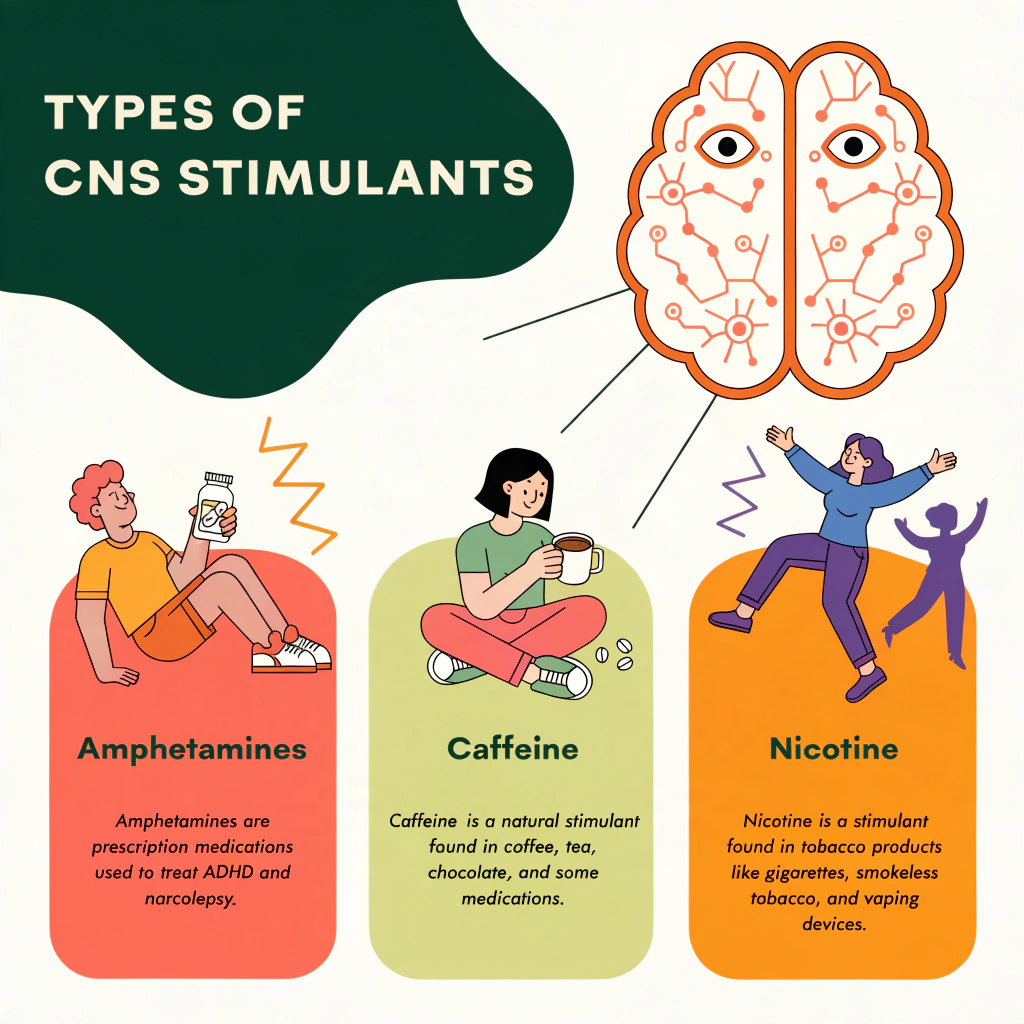
Central nervous system (CNS) stimulants are not all the same. While they share the goal of increasing alertness and improving communication between brain cells, they differ in how quickly they begin working, how long their effects last, and which medical conditions they are designed to treat. These differences help clinicians choose a medicine that matches a patient’s lifestyle, diagnosis, and treatment goals.
In our opinion, understanding the different types of CNS stimulants is just as important as understanding the medicine itself. A treatment that works well for someone attending school may not be the best option for a shift worker or a person living with narcolepsy.
The main types of Central Nervous System stimulants are explained below.
1. Short-Acting Central Nervous System Stimulants
Short-acting stimulants begin working relatively quickly and usually remain effective for three to six hours. Because their effects wear off sooner, they may require more than one daily dose to maintain symptom control.
These medicines are often chosen when doctors want to assess how a patient responds before moving to a longer-lasting formulation. They also allow greater flexibility because the dose can be adjusted more easily during treatment.
Examples include immediate-release methylphenidate and immediate-release dexamfetamine.
2. Intermediate-Acting Central Nervous System Stimulants
Intermediate-acting stimulants provide a balance between rapid symptom relief and longer daytime control. Their effects generally last six to eight hours, reducing the need for repeated dosing throughout the day.
Many school-aged children and working adults benefit from this duration because it often covers normal daytime activities without extending too far into the evening, helping reduce the likelihood of sleep disturbance.
Several modified-release methylphenidate formulations fall into this category.
3. Long-Acting Central Nervous System Stimulants
Long-acting stimulants are formulated to provide stable symptom control for 10 to 16 hours, depending on the medicine and the individual patient. Instead of producing noticeable peaks and troughs, they release the active ingredient gradually, helping maintain consistent therapeutic effects throughout the day.
These medicines are commonly prescribed when all-day symptom management is required. They also reduce the inconvenience of taking multiple daily doses and may improve treatment adherence.
Examples include lisdexamfetamine, prolonged-release methylphenidate, and the wakefulness-promoting medicine modafinil, which has a half-life of around 12 to 15 hours.
4. Wakefulness-Promoting Agents (Eugeroics)
Although often discussed alongside traditional CNS stimulants, modafinil belongs to a specialised group called eugeroics. These medicines primarily promote wakefulness rather than producing broad central nervous system stimulation.
Unlike amphetamine-based stimulants, modafinil has a more selective effect on brain pathways involved in maintaining alertness. It influences dopamine transporters and several neurotransmitters linked to the sleep-wake cycle, including orexin and histamine. This makes it particularly valuable for people with narcolepsy and other disorders characterised by excessive daytime sleepiness.
In the UK, modafinil is prescribed under specialist supervision and remains one of the most recognised wakefulness-promoting medicines available.
5. Traditional Psychostimulants
Traditional psychostimulants increase the activity of dopamine and norepinephrine, two neurotransmitters essential for attention, motivation, learning, and executive function. They are the medicines most frequently prescribed for attention deficit hyperactivity disorder (ADHD).
Rather than simply increasing energy, these medicines improve the efficiency of communication between brain regions responsible for planning, concentration, and impulse control. When prescribed appropriately, they help many patients remain focused during education, work, and everyday tasks.
Common examples include methylphenidate, lisdexamfetamine, and dexamfetamine.
Which Type Is of Central Nervous System Stimulant is The Best?
There is no single CNS stimulant that is best for everyone. The most appropriate choice depends on several factors, including the medical condition being treated, the severity of symptoms, the patient’s age, daily routine, other health conditions, and how long symptom control is needed.
For example, someone with ADHD may benefit from a long-acting stimulant that provides consistent focus throughout the working day, while a person with narcolepsy may receive modafinil to improve daytime wakefulness without using a traditional psychostimulant.
UK clinicians follow recommendations from NICE, the British National Formulary (BNF), and the Medicines and Healthcare products Regulatory Agency (MHRA) when selecting a CNS stimulant. Regular follow-up appointments help ensure the medicine continues to provide meaningful benefits while minimising side effects and maintaining long-term safety.
What is the Duration of Central Nervous System Stimulants?
The duration of Central Nervous System Stimulants involve medicines that differ mainly in how quickly they begin working and how long their clinical effects last.
The duration of Central Nervous System Stimulants is presented in the table below.
| Stimulant | Definition | Examples | Duration of Action | Onset Time | Common Clinical Uses |
|---|---|---|---|---|---|
| Short-Acting Central Nervous System Stimulants | Medicines that produce rapid effects but remain active for a relatively short period. | Immediate-release methylphenidate, immediate-release dexamfetamine | Approximately 3–6 hours | 20–60 minutes | ADHD, short periods requiring symptom control, dose titration, and situations where flexible dosing is preferred. |
| Intermediate-Acting Central Nervous System Stimulants | Medicines designed to provide symptom control for part of the day with fewer daily doses than short-acting products. | Modified-release methylphenidate formulations | Approximately 6–8 hours | 30–60 minutes | ADHD requiring symptom control throughout school or working hours. |
| Long-Acting Central Nervous System Stimulants | Medicines formulated to provide consistent therapeutic effects throughout most of the day from a single dose. | Lisdexamfetamine, prolonged-release methylphenidate, modafinil (long-lasting wakefulness-promoting agent) | Approximately 10–15 hours, depending on the medicine | 30 minutes to 2 hours | ADHD, narcolepsy, and selected sleep disorders requiring prolonged symptom control. |
The choice between these formulations depends on the patient’s diagnosis, daily routine, age, treatment goals, and response to previous therapy. A qualified healthcare provider selects the most appropriate option after considering the expected benefits, duration of symptom control, and potential side effects.
Is Seeing a Doctor Necessary Before Taking Central Nervous System Stimulant Medications?
Yes, seeing a doctor is necessary before taking Central Nervous System Stimulant medications because these medicines affect important brain pathways and are not suitable for everyone.
Before prescribing treatment, the doctor reviews your medical history, current medicines, cardiovascular health, blood pressure, mental health history, sleep pattern, and any previous reactions to stimulant medicines. They also investigate underlying conditions such as narcolepsy, obstructive sleep apnoea, thyroid disorders, anxiety disorders, depression, or other sleep conditions that may require different treatment.
Medical supervision also helps determine whether stimulant therapy is appropriate, identify possible medicine interactions, monitor treatment effectiveness, and reduce the risk of misuse or unnecessary exposure. During follow-up appointments, doctors assess blood pressure, heart rate, weight, appetite, sleep quality, and any emerging side effects. If treatment needs to be reduced or discontinued, they also manage withdrawal symptoms where appropriate and ensure this happens safely.
In the UK, most CNS stimulant medicines are prescribed according to NICE guidance and require ongoing review to ensure that the benefits continue to outweigh any potential risks.
What Are the Common Central Nervous System Stimulant Medications?

The common Central Nervous System Stimulant medications include medicines prescribed to improve attention, reduce excessive daytime sleepiness, and support normal brain function in specific neurological conditions.
The common Central Nervous System Stimulant medications are listed below.
- Modafinil: A wakefulness-promoting medicine mainly prescribed in the UK for adults with narcolepsy. Modafinil is used to reduce excessive daytime sleepiness and improve daytime alertness.
- Methylphenidate: A first-line CNS stimulant widely prescribed for ADHD. It increases dopamine and norepinephrine activity to improve concentration and reduce impulsivity.
- Lisdexamfetamine: A long-acting stimulant medicine converted into dexamfetamine after absorption, providing consistent symptom control for many people with ADHD.
- Dexamfetamine: A fast-acting stimulant prescribed for ADHD and occasionally narcolepsy when other treatments are unsuitable or insufficient.
- Mixed Amphetamine Salts: Stimulant medicines used in some countries for ADHD and narcolepsy. They are not routinely licensed for medical use in the United Kingdom.
- Dexmethylphenidate: The active isomer of methylphenidate used in several countries to improve attention and executive function in patients with ADHD.
- Solriamfetol: A dopamine and norepinephrine reuptake inhibitor licensed in the UK for excessive daytime sleepiness associated with narcolepsy and obstructive sleep apnoea.
- Pitolisant: Although not a traditional stimulant, this histamine H3 receptor antagonist promotes wakefulness and is prescribed in the UK for selected adults with narcolepsy.
While these medicines all improve alertness or attention, they differ in their mechanism of action, duration, licensing, and clinical indications. The most appropriate medicine depends on the patient’s diagnosis, overall health, and individual treatment needs.
What Are the Common Conditions for Which Modafinil Is Used?
The common conditions for which Modafinil is used are listed below.
- Narcolepsy: A chronic neurological disorder causing excessive daytime sleepiness and sudden sleep attacks.
- Shift Work Sleep Disorder (SWSD): Helps improve wakefulness in people working overnight or rotating shifts.
- Residual Excessive Sleepiness in Obstructive Sleep Apnoea: Improves daytime alertness when sleepiness persists despite effective CPAP treatment.
- Idiopathic Hypersomnia: May improve excessive daytime sleepiness under specialist supervision where clinically appropriate.
- Multiple Sclerosis-Related Fatigue: Sometimes prescribed off-label to reduce disabling fatigue in selected patients.
- Traumatic Brain Injury-Related Fatigue: May improve alertness during neurological rehabilitation in carefully selected individuals.
- Parkinson’s Disease-Related Sleepiness: Occasionally prescribed off-label to reduce excessive daytime sleepiness in specialist care.
- Cancer-Related Fatigue: Used off-label in selected patients to improve alertness during supportive cancer care.
- Attention Deficit Hyperactivity Disorder (ADHD): Occasionally prescribed off-label when standard treatments are unsuitable or ineffective.
- Cognitive Fatigue Associated with Neurological Disorders: May improve mental alertness in selected patients following specialist assessment.
Is a Prescription Necessary for Buying Modafinil in the UK?
Yes, a prescription is necessary if you want to buy modafinil in the UK, because modafinil is a Prescription Only Medicine (POM) regulated under the Human Medicines Regulations 2012. It cannot be legally supplied by a UK pharmacy without a valid prescription issued by an authorised healthcare professional.
Although modafinil belongs to the wider group of Central Nervous System Stimulants, it has a distinct mechanism of action and is prescribed only after a doctor confirms that treatment is clinically appropriate. Before prescribing, the doctor evaluates the underlying cause of excessive daytime sleepiness, reviews medical history, checks for medicine interactions, and considers whether another condition requires different treatment.
Modafinil is prescribed primarily for recognised medical conditions such as narcolepsy and selected sleep disorders, and ongoing clinical review helps ensure that treatment remains safe and effective.
This article was clinically reviewed on 30 July 2026.